Areas and volumes of figures
Plane figures and solids · area · perimeter · volume
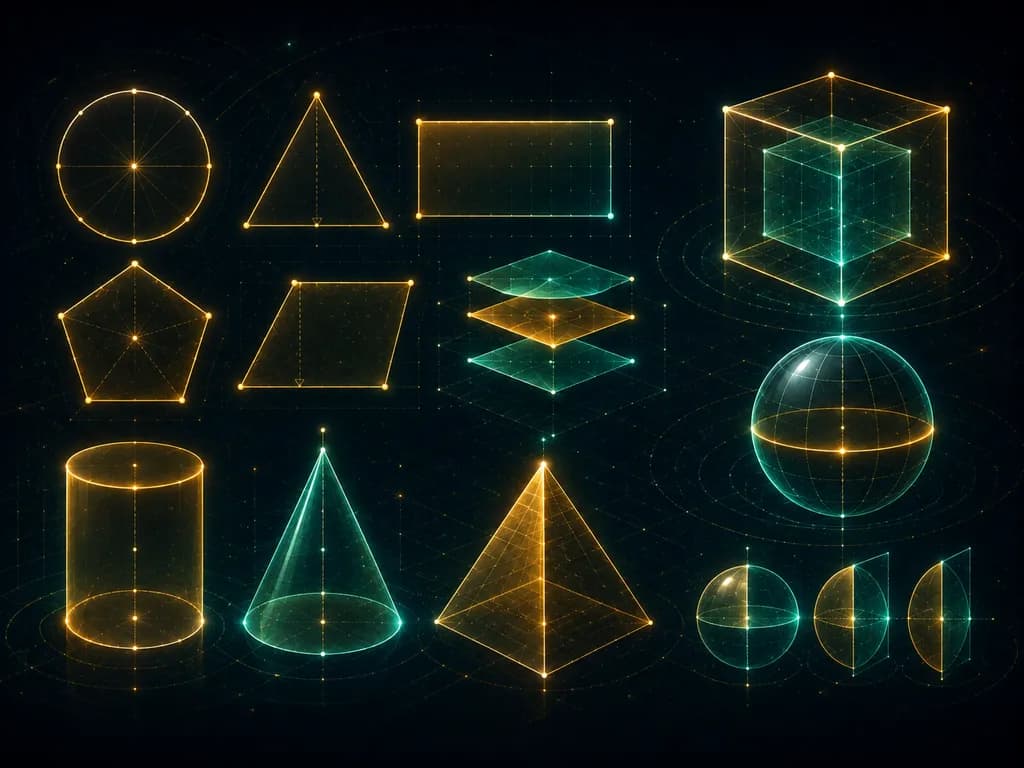
Results in units matching the input: area in units², volume in units³. π ≈ 3.14159.
A calculator of areas, perimeters and volumes of the most common figures. For plane figures it computes area and perimeter — e.g. a circle:
For solids — the total surface area and the volume, e.g. a sphere and a cylinder:
Pick a figure, enter the dimensions — you get all the quantities at once. Results are in units matching the input (area in square units, volume in cubic units).
Examples
Frequently asked questions
What is the difference between area and volume?+
Area measures a surface (square units, e.g. cm²); volume measures the space a solid occupies (cubic units, e.g. cm³). Plane figures have area and perimeter; solids have surface area and volume.
How do I compute the surface area of a cylinder?+
It is the two bases (2πr²) plus the lateral surface (2πrh), together 2πr(r+h). The calculator also reports the lateral area on its own.
Teaching? Embed this calculator on your site.
Free widget — paste it on your school site, blog or notes. It links to the full version.