Capacitors
Equivalent capacitance · charge Q · energy E = ½CU²
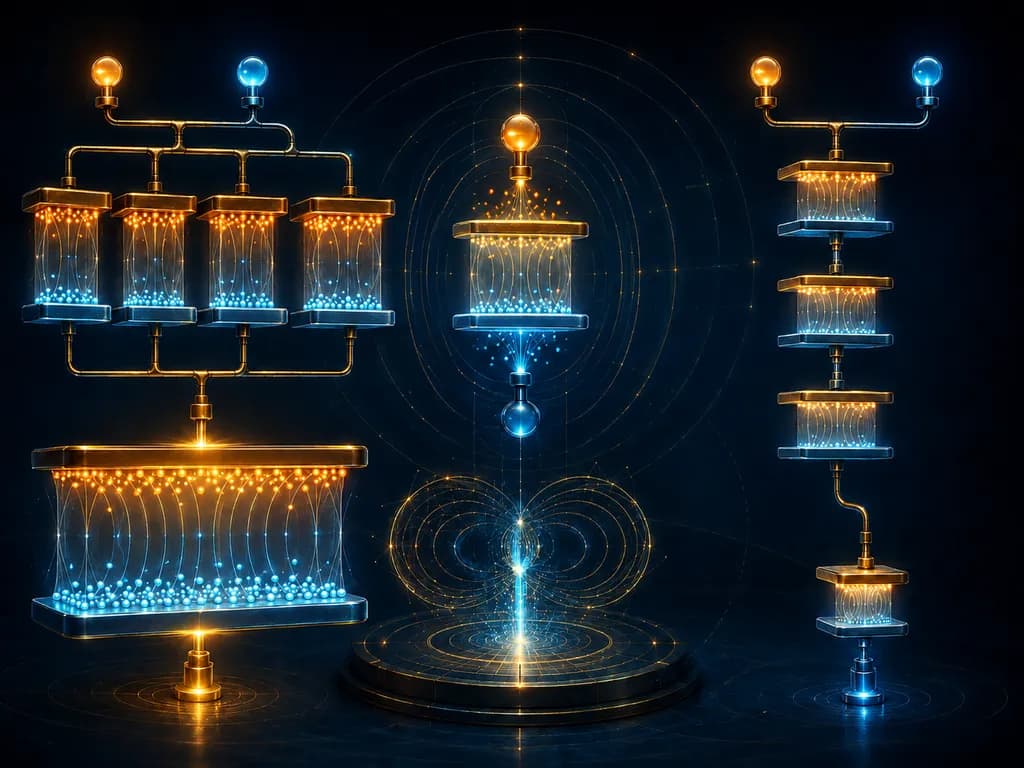
A capacitor stores charge and energy in the electric field:
When connecting capacitors, the rules are the opposite of those for resistors:
So in parallel the capacitances add up (like the areas of the plates), and in series the equivalent capacitance is smaller than the smallest capacitor. The calculator computes the equivalent capacitance of the arrangement as well as the charge and energy of a single capacitor.
Examples
Frequently asked questions
Why are capacitors connected the opposite way to resistors?+
Because in parallel they enlarge the effective plate area (the capacitances add up), and in series they enlarge the separation, which reduces the capacitance. For resistors it is the other way around.
Where does a capacitor store energy?+
In the electric field between the plates. The energy E = ½CU² lets it release the stored charge quickly — hence its use in camera flashes and power supplies.
Teaching? Embed this calculator on your site.
Free widget — paste it on your school site, blog or notes. It links to the full version.